मौलिक कहानियाँ
तीर के बिना मार्ग
⏱ 3–5 मिनट
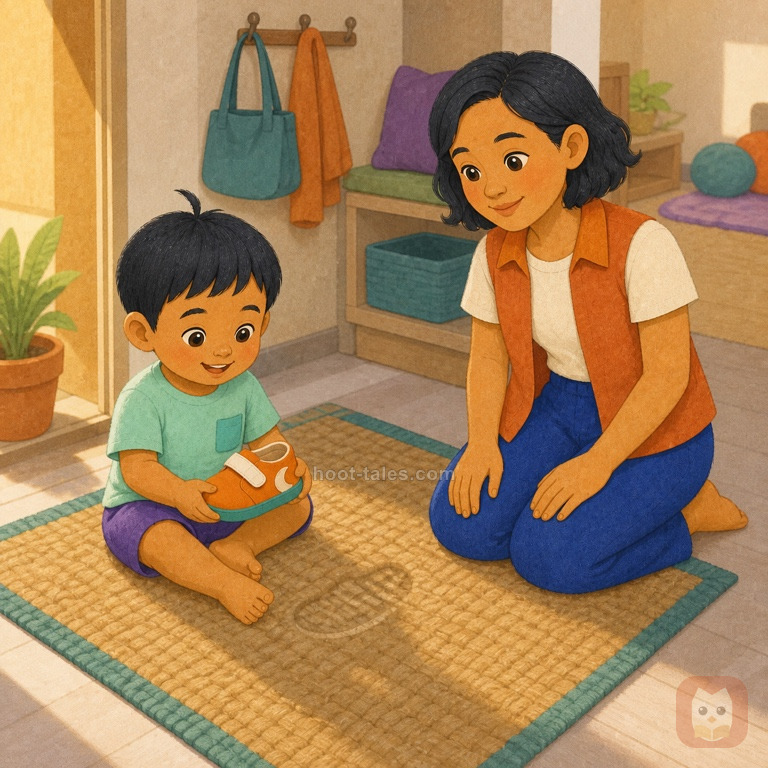
बारिश के बाद, माँ ने सूखी ल्यूशन पर सूखी किलों की टोकरी को हटाया. दोट, कोड़े, लंबी, छोटे, छोटे बड़े पैमाने पर एक साथ फेंक दिया. 'मैं हर जोड़े को मिल जाएगा!' Mool घोषणा की. "
इसलिए वह रंग से रंग, फिर आकार लेकर रंग लेती थी ।
एक रात जब मैं अपने पिता के पास पहुँचा तो मैंने देखा कि वह एक छोटे - से कमरे में है ।
लेकिन, कुछ ही समय बाद, मेरी नानी ने अपने आपको एक छोटे - से - छोटे सुराग के लिए खोज की और पाया कि वह आखिरी जोड़े को एक स्ले में छिपा हुआ है ।
जब वह पूरी टोकरी को मिला, तो वह वास्तव में पता लगा सकती थी कि कहाँ शुरू होगा ।
जब समस्या पैदा हो जाती है, तो एक बार में एक सुविधा से इसे ध्यान से देखिए ।
एक कपड़े धोने का ढेर असंभव लग रहा है जब तक कि रंग, पैटर्न, आकार, और छोटे संकेत द्वारा Mult, और और पता चलता है कि एक जोड़ी हर तरह से मैच की जरूरत नहीं है.
Parents' guide
Children who enjoy sorting, looking for patterns, or feel overwhelmed by a mixed pile. Practice changing one criterion at a time without turning tidying into a test.
Mook first matches by color and discovers that color alone is insufficient. One pair intentionally has two different patches, so children need not learn that a pair must match in every detail.
Materials: 6–10 safe household objects, paper group labels
Small objects are unsuitable for children who still mouth items. Choose large, unbreakable, blunt objects and supervise the activity.
Do not immediately correct a group that differs from yours. Ask which rule the child used; more than one answer may be reasonable.
एक ही संग्रह से अधिक कहानियां, आपके लिए चुना गया