滑到内容
Hoot Tales

木瓜和混合袜

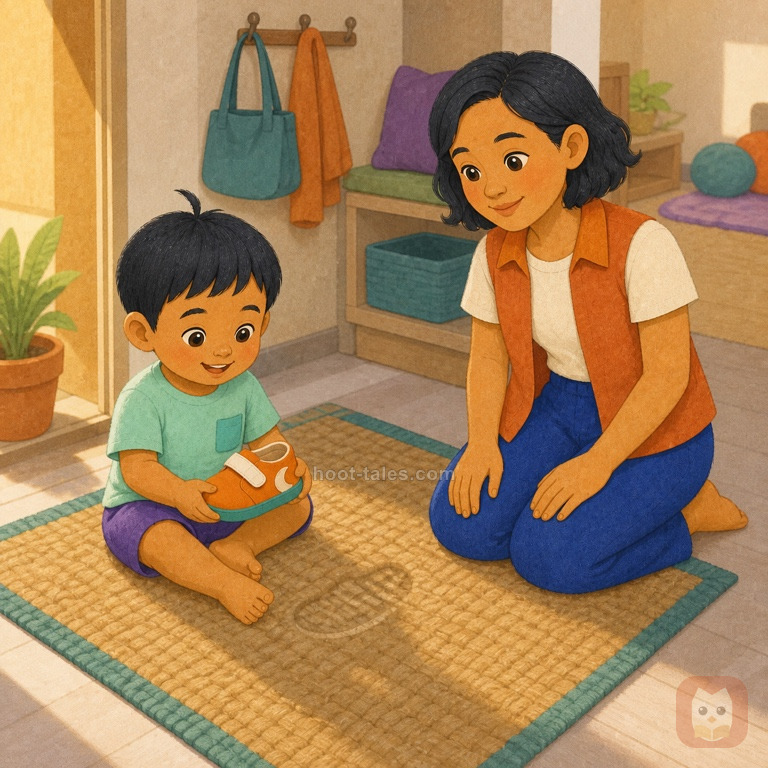
雨后,妈妈把一篮干袜子倒在垫子上。圆点、条纹、长条、短、短小和大袜子一起倒塌。“我会找到每对!”穆克说:

蓝色袜子有星星和船。所以她按照颜色、图案、体型、大小进行分类。泥浆堆开始变成整齐的行。

一只有月亮,另一只有星星,Mook以为它们不可能是一对,但爸爸指出两只手铐的绿线相同。

当然了! 奶奶用不同的方法来修补它们,这样Mook就能从右向左看。 Mook寻找了更多的小线索,找到了最后的一对藏在手帕下的。

Mook把每对夫妇都塞进一个分割的盒子里,在前面画出颜色、图案和大小符号。下次整篮子都混在一起时,她会知道从哪开始。

当问题看起来缠绕在一起时, 一次按一个特征排序 。

关于这个故事

洗衣堆看起来不可能, 直到Mook按颜色、型式、大小和小线索排列, 发现一对不需要在每种方式上匹配。

关于 2–4 分钟👧 最适合年龄 4–8📚 原创故事

孩子们可以学到的

资源和解决问题
写作和翻译
由 Hoot Tales
许可证
原创作品 · : Hoot Tales
分享這個故事

Parents' guide

Sort one feature at a time with Mook's mixed-up socks

A good fit for

Children who enjoy sorting, looking for patterns, or feel overwhelmed by a mixed pile. Practice changing one criterion at a time without turning tidying into a test.

Know before reading

Mook first matches by color and discovers that color alone is insufficient. One pair intentionally has two different patches, so children need not learn that a pair must match in every detail.

Words to explore

feature
a detail used to observe or compare, such as color, pattern, or size
sort
to place things into groups using a chosen rule
patch
a piece of material sewn over a worn or torn area

Before reading

  • Where would you begin with a large sock pile?
  • Must two objects match in every way to form a pair?

While reading

  • Why is matching by color alone not enough?
  • How does the green thread change Mook's idea about the yellow socks?

After reading

  • Which sorting rules does Mook use, and in what order?
  • If the final pair stayed missing, where could Mook check or whom could she ask?
  • Which other problem could we solve by looking at one feature at a time?

A 10-minute after-reading activity

About 10 minutes

Materials: 6–10 safe household objects, paper group labels

  1. Let the child choose a first rule, such as color, shape, or size, and sort the objects.
  2. Choose a new rule and notice which objects change groups.
  3. Pick two different objects and find one feature they share.

What may feel scary or confusing

Small objects are unsuitable for children who still mouth items. Choose large, unbreakable, blunt objects and supervise the activity.

For adults: leave room for the child's view

Do not immediately correct a group that differs from yours. Ask which rule the child used; more than one answer may be reasonable.

Sources for the shared-reading approach

准备好再度冒险了吗?

更多来自同一系列的故事,为您选择