Choosing stories
Are villains and scary moments suitable for my child?
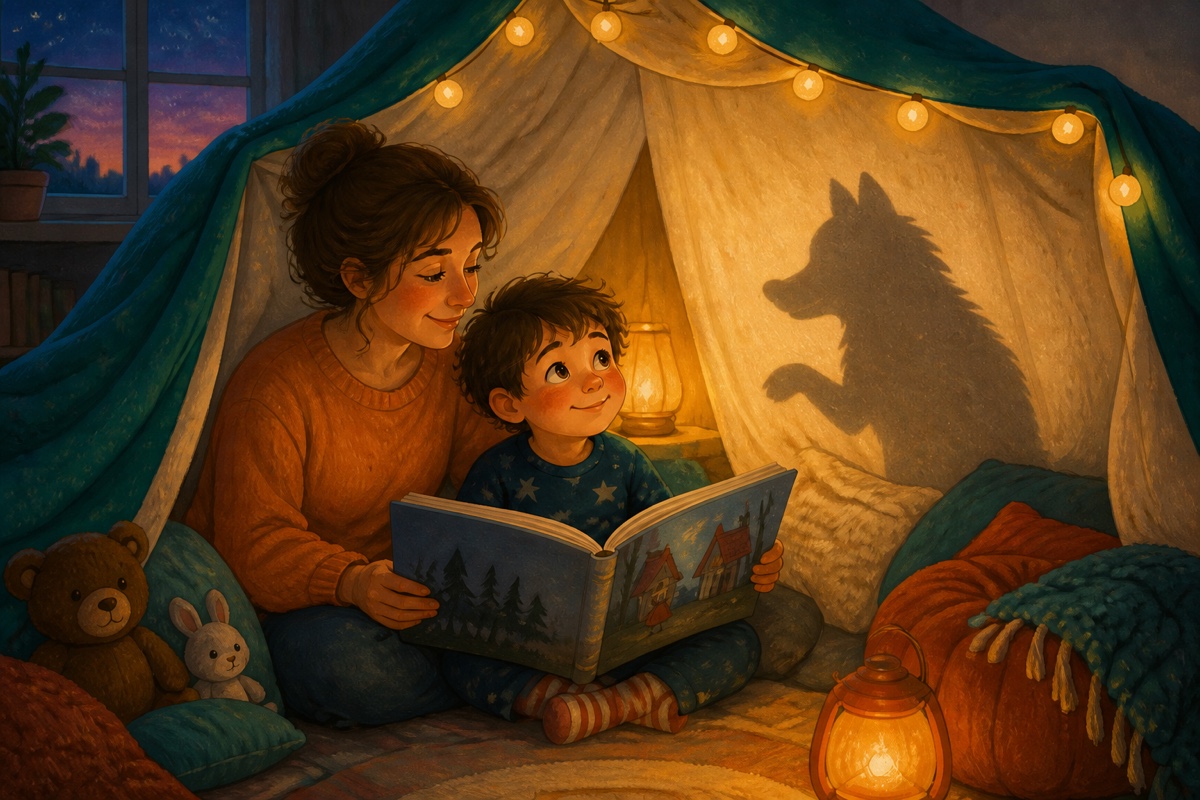
A villain, darkness, getting lost, or being chased may create suspense one child enjoys and another finds overwhelming. An age label is a useful first filter, but it cannot replace a child's sensitivities, experiences, and state that day. The options are not limited to banning every frightening story or forcing one in the name of bravery. Adults can preview, give useful information, and let children control their distance.
Assess intensity, not just a children's label
Break the experience down. How long does the threat last? How close and explicit are the pictures? Does the character have choices? Does a caregiver respond? How does the ending restore safety? A comic villain defeated through cleverness may feel different from a trapped character even when both books carry the same age band.
Thailand's Department of Health advises choosing stories for age and interest, but children of one age still respond differently. A child who recently experienced something similar, is overtired, or is already worried may receive the same image differently on another day. Use age guidance together with knowledge of the actual child.
Prepare without removing all suspense
Give a concise content note: “A troll threatens the goats at the bridge, and we can stop at any time.” Let the child read, preview the picture, or choose something else. Knowing there is an exit keeps suspense inside a boundary the readers agreed upon.
Choose an easy signal—a raised hand, a touch, or the word “pause.” The child need not justify how afraid they are. When they use it, stop. Do not tease them or rush to the ending to prove that everything becomes fine.
During reading: be a partner, not a courage examiner
Watch the body instead of waiting for a declaration. A child may tense, turn away, cover ears, laugh defensively, or flip quickly. Ask briefly whether to continue, skip, or stop. If they move closer, offer steadiness through voice and position rather than insisting there is “nothing scary.” To the child, there may be.
If suspense is enjoyable, do not interrupt every page with warnings. Pause when you see a cue or reach an agreed point. Chosen, manageable fear can coexist with fun, but the adult need not amplify the scene with harsher voices or more violent play.
After reading: restore safety without rushing to a moral
Ask, “Which part felt most intense?” “What helped?” or “What would make it safer?” The child may draw another escape, make the villain silly in play, or decline to talk. Finish with a familiar routine and allow the body to settle.
If nightmares, persistent fear, avoidance, or distress disrupt daily life, pause the story and seek appropriate professional advice. Do not create an exposure program through repeated reading on your own. This guide is general education, not individualized therapy advice.
- Do not tease or share the child's fear with others
- Do not use a villain to threaten obedience
- Return only when the child wants to and can still stop
Stories to preview first
Continue reading
Sources
- เลี้ยงลูกนิทาน... ตามวัย — กรมอนามัย กระทรวงสาธารณสุข
- Literacy Promotion: An Essential Component of Primary Care Pediatric Practice — American Academy of Pediatrics (2024)
- Learning About Emotions Through Play — UNICEF Serbia