Talk through stories
Talking about anger, fear, waiting, and disappointment through characters
Stories let families discuss emotion through something on the page instead of opening with “What's wrong with you?” A child can talk about a startled rabbit, a disappointed cloud, or a frightened boy while keeping some distance from personal experience. The goal is not to use a character to teach feelings away. It is to notice, name, and separate a valid feeling from the actions that follow.
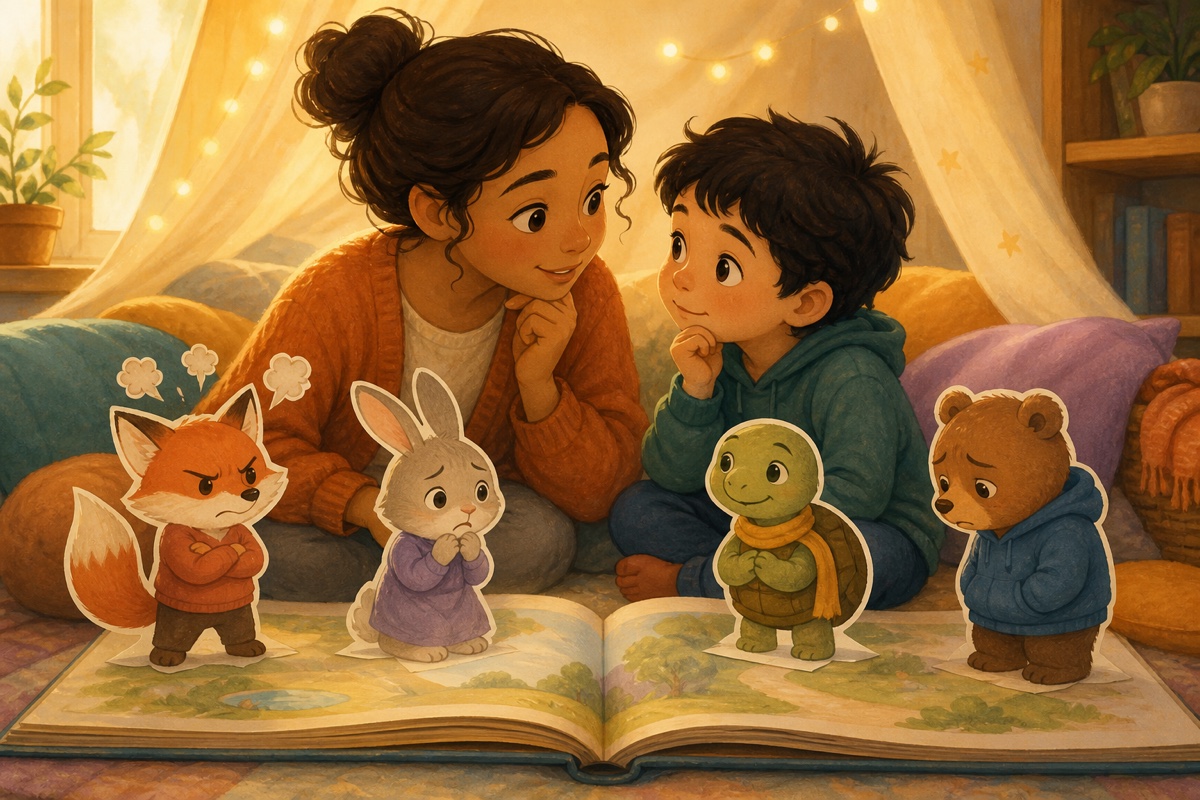
Observe before you label
Start without judgment: “The character's fists are tight and eyebrows are pulled down.” Then ask, “What might they be feeling?” A child may say angry, afraid, or intensely focused. Each answer can lead back to evidence in the picture or plot; the adult does not need to reveal a prepared emotion word immediately.
UNICEF suggests playful facial expressions, naming feelings, and finding emotions in books. These practices can expand a broad “bad” into disappointed, worried, lonely, or frustrated. Add language one step at a time and keep it appropriate for the child rather than turning reading into vocabulary drill.
Separate a feeling from an action
When a character shouts, pushes, or runs away, validate the feeling without approving every action: “They can be angry, and pushing hurts. What else might they try?” The child does not have to choose between believing their feeling is wrong and believing a safety boundary is wrong.
Explore two or three alternatives: pause and breathe, ask for space, say no, seek adult help, or repair the relationship after calming down. Let the character test these options first. The child need not promise to behave perfectly in every future moment.
- Anger: what signals appear in the body?
- Fear: what might increase safety?
- Waiting: what can the character do meanwhile?
- Disappointment: what can change after the first plan fails?
Listen for meaning instead of extracting a lesson
If the child says a character has every reason to be angry, do not rush to “but they should forgive.” Reflect first: “You think they were treated unfairly.” The child may be seeing a question of boundaries, safety, or justice that differs from the moral an adult expected.
A useful question does not need to end in a lesson. Ask, “What does the character need someone to do?” or “Would a friend sitting quietly help?” If the child connects the plot to real life, ask whether they want listening, ideas, or action before leaping into a solution.
Know when to stop and when to seek help
If a story makes a child tense, cover their ears, avoid the picture, or ask to stop, stop and confirm that they control the distance. A book should not be used to force exposure to fear or demand disclosure. Returning later is optional.
Stories can open conversation but are not therapy. If a child describes harm, lack of safety, or persistent severe distress, listen calmly, protect their safety, and contact an appropriate professional or service. This article provides general education only.
Stories for emotion conversations
Continue reading
Sources
- Learning About Emotions Through Play — UNICEF Serbia
- Positive parenting tips for babies and children ages 0–5 — UNICEF East Asia and Pacific (2026)
- Literacy Promotion: An Essential Component of Primary Care Pediatric Practice — American Academy of Pediatrics (2024)