Original Stories
Whose Shadow Goes First?
⏱ 3–5 min
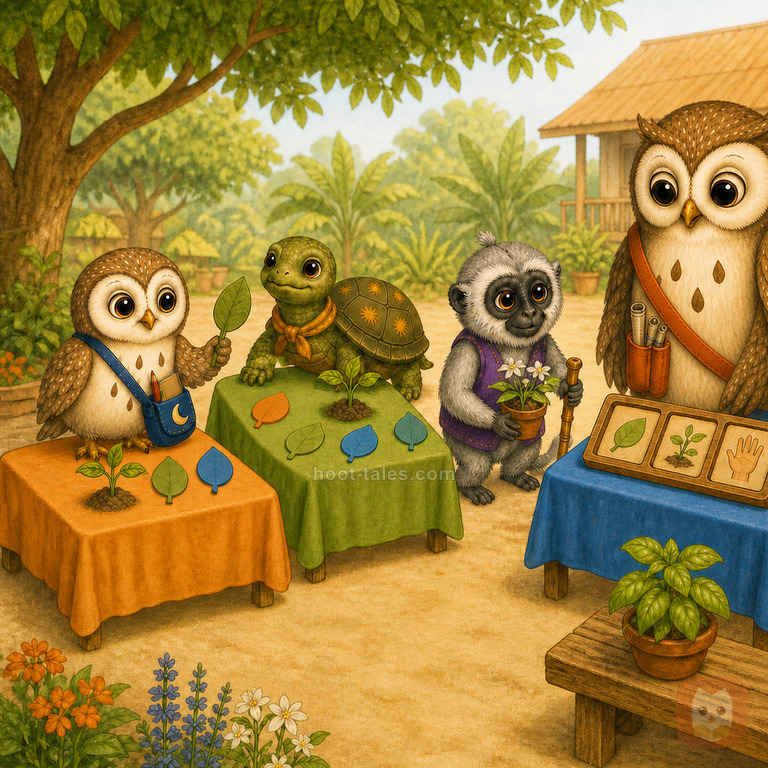
At the pavilion swap day, Jibjib brought one picture book, Tuam brought two spinning tops, and Hookhook offered time to repair a kite. Nothing had a price, yet everyone argued about who was giving more.
Hookhook tried one paper token per object. The book received one and the tops received two, but repair time had nowhere for a token. Counting pieces made a larger pile seem more valuable before anyone asked what people wanted.
They switched to three questions: What do I want? What am I willing to offer? Does this agreement feel comfortable to everyone? Jibjib wanted the kite to fly, Tuam wanted to reread the book, and Hookhook wanted to borrow a top for sketching.
They agreed that Jibjib and Tuam would repair the kite, Jibjib would lend Hookhook the book, and Tuam would lend Hookhook one top. Owner and return-day picture cards made each loan clear, and anyone could change their mind before starting.
By evening the kite flew, the book returned, and both tops were accounted for. Nobody counted winnings. They simply asked whether the agreement still worked for everyone, and all three smiled.
Value depends on people's needs and mutual agreement, not only on how many objects are exchanged.
At swap day, the children discover that one book, two toys, and time spent repairing a kite cannot be compared by item count. They replace number tags with agreements everyone accepts.
More stories from the same collection, picked for you