One Tale, Many Voices at the End
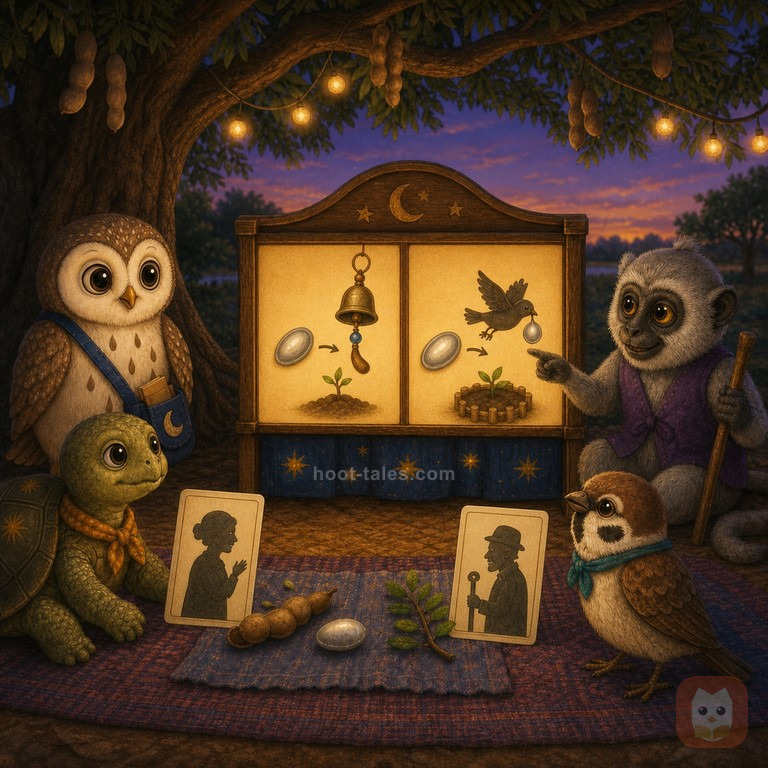
Grandma Chan shared an original family tale passed among relatives, ‘Moonseed and the Wind Bell.’ Aunt Sai's version ended with a seed sprouting beside the bell. Uncle Mek's ended with a bird returning it to the garden. They began alike and traveled differently.
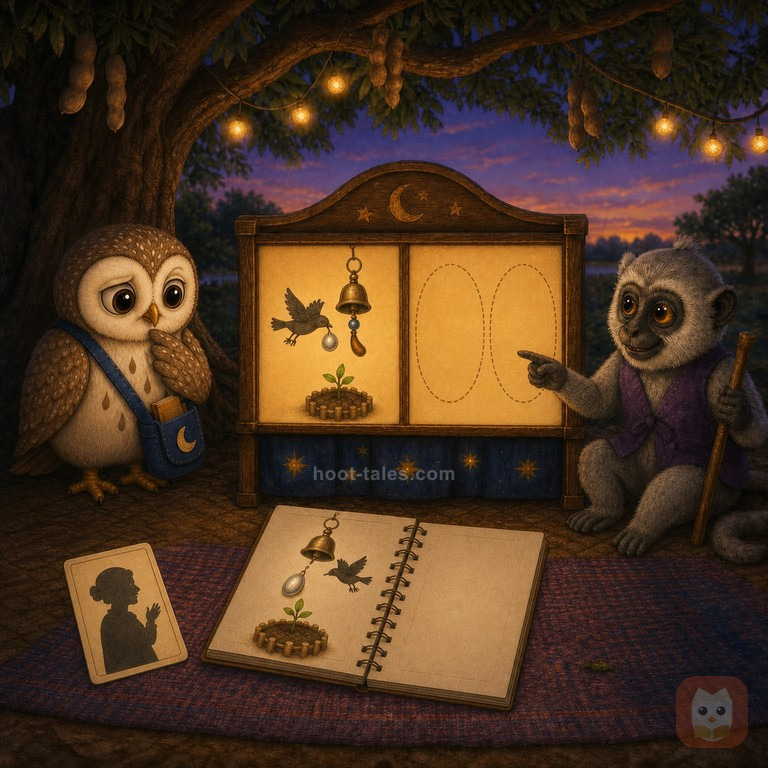
Hookhook liked both and quickly drew a play where the seed sprouted on a bird beneath the bell, adding only a self-picture credit. Grandma asked which part came from whom and whether the tellers had agreed to a performance. Hookhook looked down at the notebook.
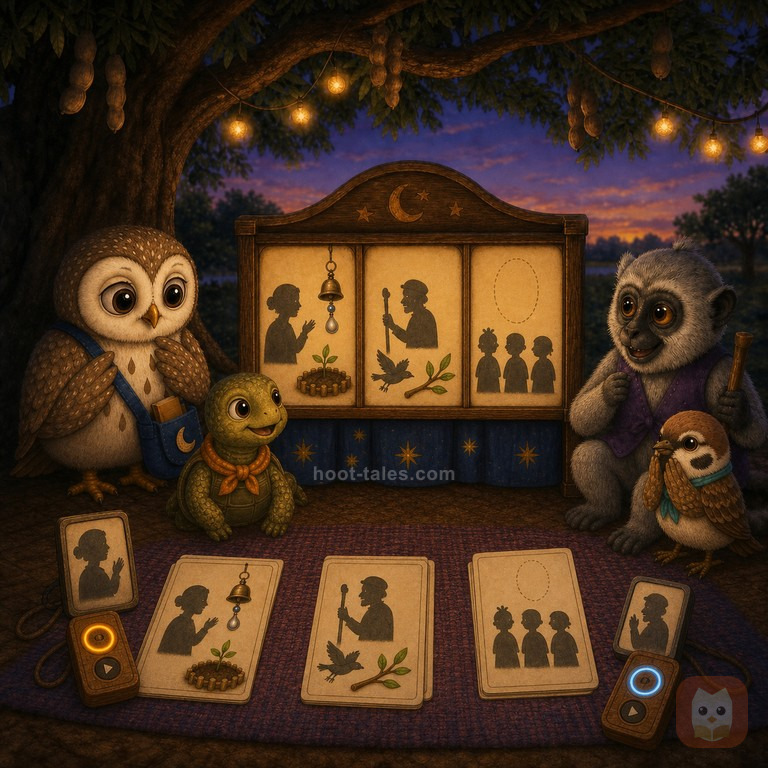
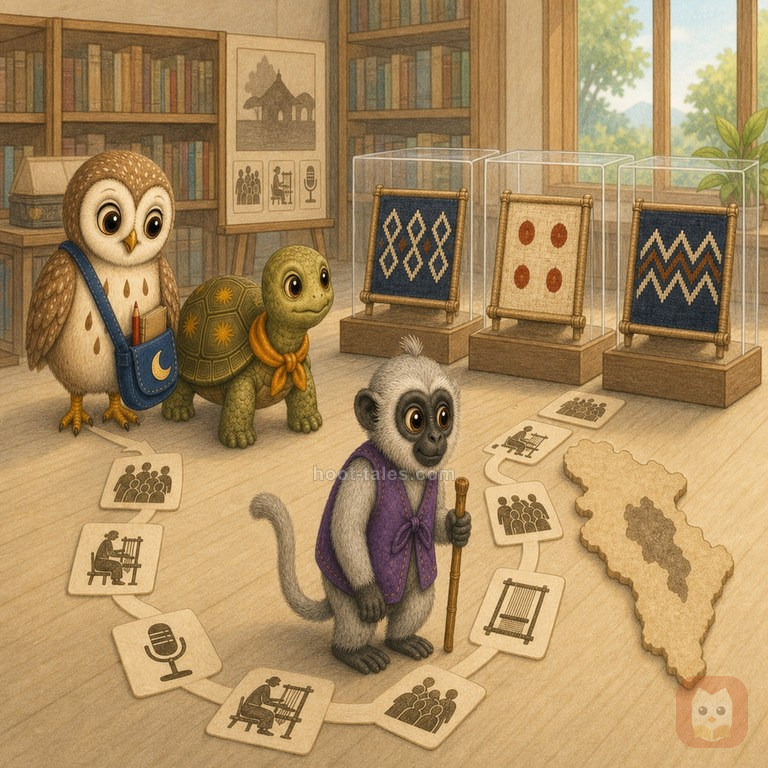
They listened to recordings from Aunt Sai and Uncle Mek. Both welcomed a play using the opening if their versions were named and nobody claimed one ending was the only correct one. Hookhook made three card groups: heard from Sai, heard from Mek, and newly made by the children.
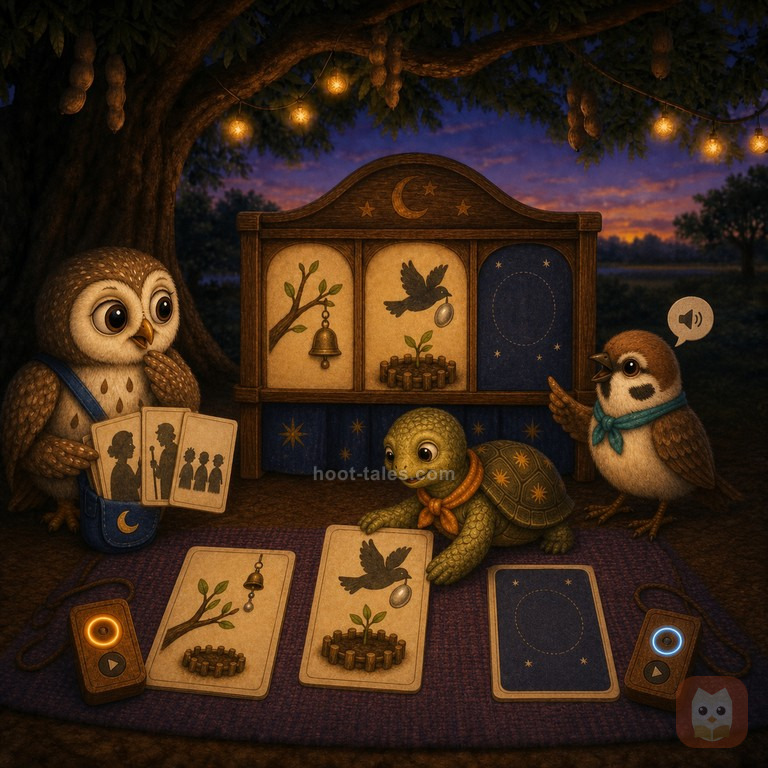
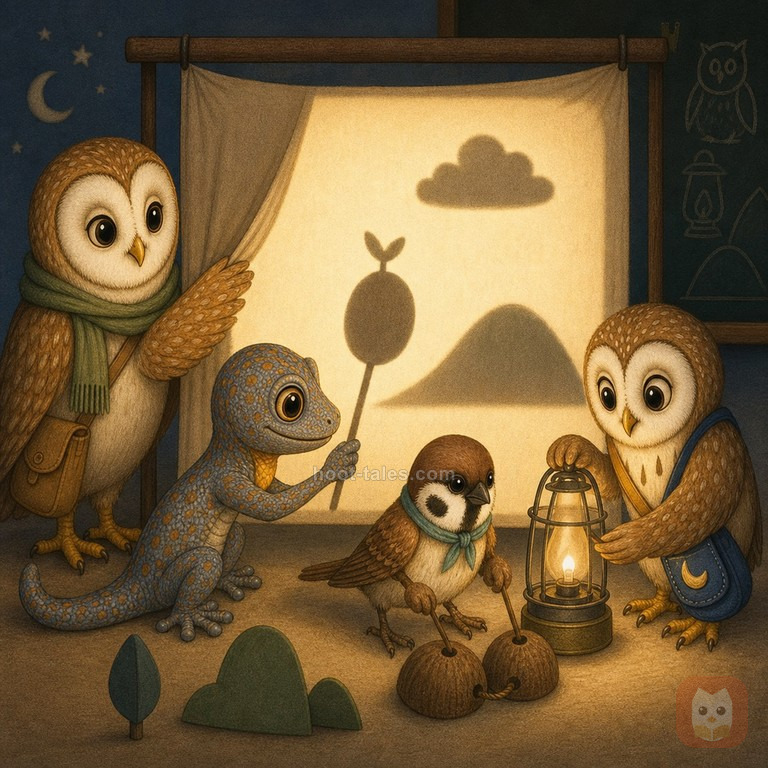
The children did not fuse the endings. They built three stage windows: a sprouting branch, a bird returning to the garden, and a blank window where the audience could draw a new destination. Jibjib narrated, Tuam moved scenery, and Hookhook showed picture credits first.
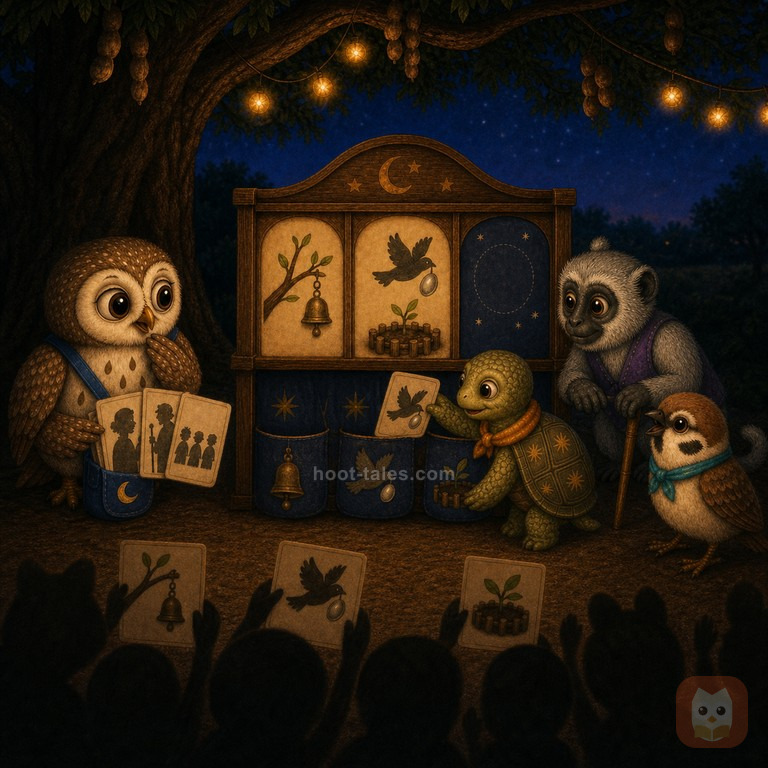
After the play, nobody voted for a winner. Audience members shared how one story changed in their homes. Hookhook kept every card with its teller. One tale had not broken into many endings—it had grown because every voice still had a place.
Moral of the story
Creative retelling works best when we hear differences, ask permission, and name the sources of what we borrow.
© 2026 Hoot Tales. All rights reserved in the retelling, translation, illustrations, characters, and presentation. No reproduction, adaptation, republication, or commercial use without permission.
Back to all stories