Original Stories
A Little Table from Four Regions
⏱ 3–6 min
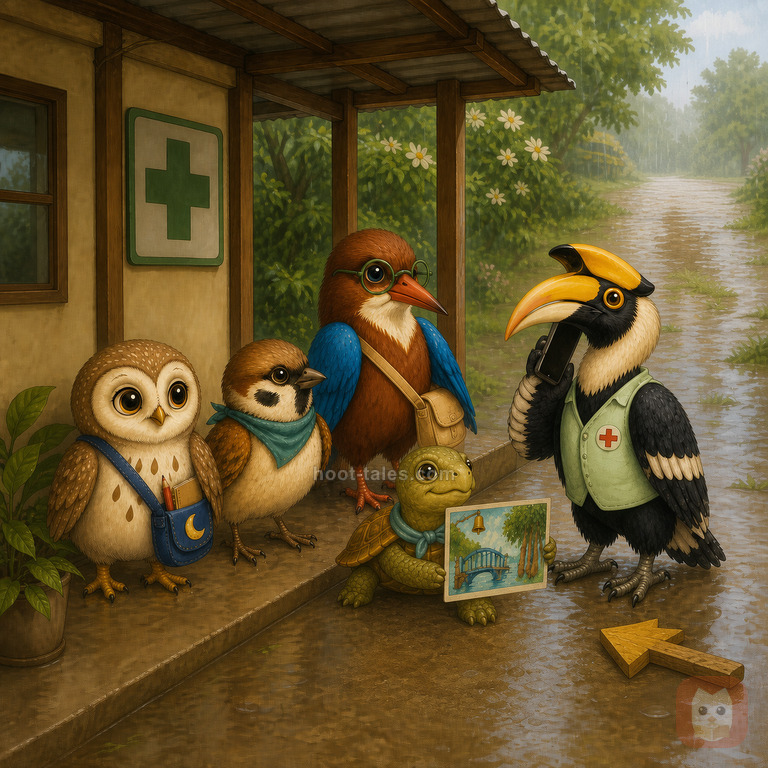
After several dry days, the first rain hit the pavilion roof. Water carried dust, leaves, and grime into the gutter. Hookhook brought the last barrel, but Father Owl asked Hookhook to stop and notice where the water had traveled.
Wearing gloves, Father Owl cleaned the gutter screen while Hookhook stayed on the ground away from the ladder. Then the adult opened a first-flush pipe, sending the dirty early flow toward a non-food flower bed.
After the first-flush chamber filled, the adult-checked system sent later rain through a screen into a tightly covered barrel. Mesh guarded the inlet and a tap sat low. Hookhook added a crossed-out cup picture: not for drinking, cooking, or toothbrushing.
Picture cards separated the jobs. Treated tap water was for drinking, washing food, and cooking. This barrel's rainwater was only for ornamental plants and floor cleaning. Father Owl recorded maintenance and checked color, odor, lid, and drainage.
After the storm, the pavilion was clean and the flower bed damp. The barrel water looked clear, but nobody tasted it. Clear described only what eyes could see; safety required maintenance, appropriate use, and water-quality advice.
Clear-looking water is not automatically safe; separating uses and having adults manage the system reduces risk.
The first rain carries leaves and roof dust into the gutter. Hookhook and Father Owl divert that early flow, keep an adult-managed barrel covered, and reserve the collected rainwater for non-drinking uses.
More stories from the same collection, picked for you