Las fables de AESOP
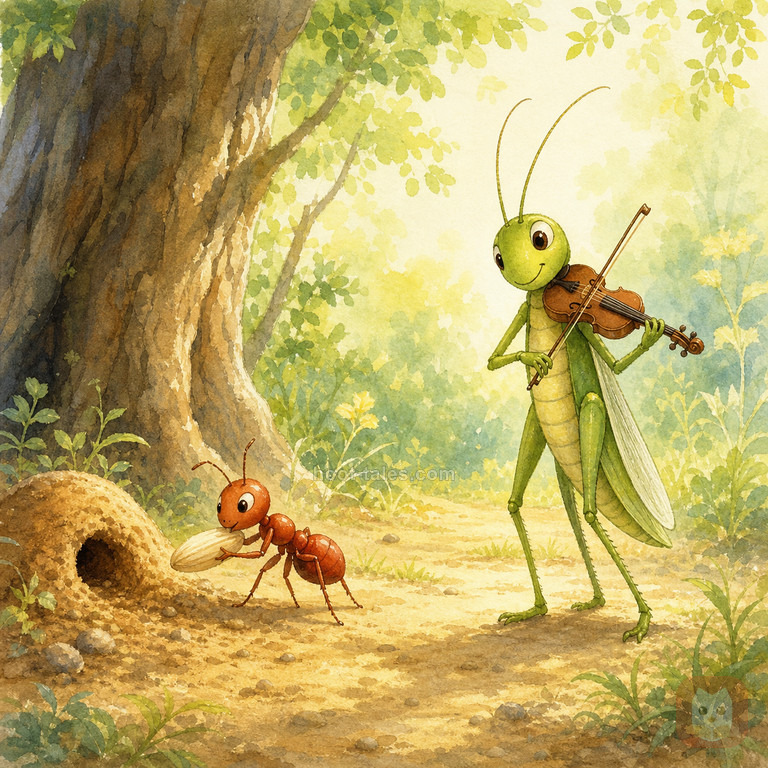
La hormiga y el saltamontes
⏱ 2–4 Min
En un día caluroso y seco, un cuervo muy sediento buscó agua durante mucho tiempo. Al fin, vio un cántaro sentado debajo de un árbol.
Encantado, el cuervo voló de inmediato, pero el agua estaba demasiado baja, y su pico era demasiado corto para alcanzarlo, no importa lo duro que lo intentara.
El cuervo intentó muchas cosas. Intentó empujar el jarrón, pero era demasiado pesado. Casi se dio por vencido y voló lejos.
De repente, el cuervo notó pequeños guijarros esparcidos cerca. Tenía una idea: tirar los guijarros en la jarra uno a la vez, por lo que el agua se elevaba lentamente.
El cuervo seguía arrojando piedras hasta que el agua finalmente se elevó lo suficiente para alcanzarla. Por fin, bebió su saciado, gracias a su paciencia y a su ingenioso pensamiento.
La perseverancia y el pensamiento inteligente siempre conducirán a un camino a seguir.
Un cuervo sediento arroja hábilmente piedras en una jarra uno por uno hasta que el agua se eleva lo suficientemente alta para beber.
Parents' guide
Children who enjoy experiments, cause and effect, or finding several possible solutions. Use it to practice pausing before acting without expecting one correct answer.
The thirsty crow nearly gives up, but the story ends safely. For the activity, use an unbreakable container with adult supervision and keep small objects away from mouths.
Materials: clear plastic cup, water, ice cubes or clean spoons
A child may think the pebbles create more water. Explain simply that they take up space and push the water level higher.
Do not reveal the crow's method immediately. Let ideas that will not work stay in the conversation; comparing reasons is part of experimenting.
Más historias de la misma colección, seleccionadas para usted