Original Stories
Whose Shadow Goes First?
⏱ 3–5 min
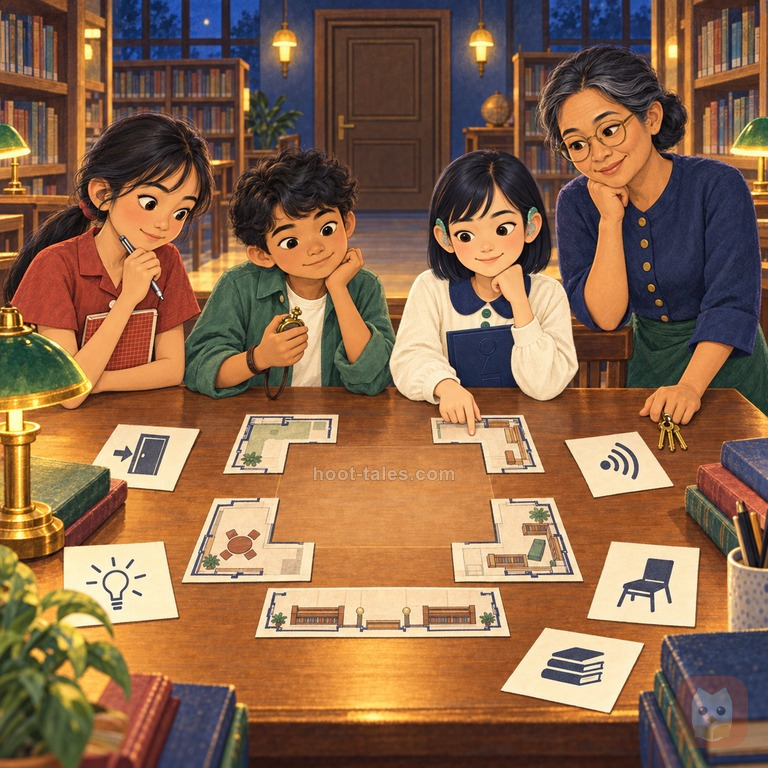
Waat joined the five plan pieces from the puzzles of the overnight reading event. Their lines led from the hall to the door of Room Zero, but the central space marked “What do users need?” was blank. Yusuf turned a piece over. “Is something hidden inside?” Aunt Praw, holding the key beside the table, explained that it was the former recording room shown on the building plan. She would wait to open it until the team understood how people might use it.
Waat traced the copied floor plan. A ramp and wide public route reached Room Zero without entering the staff area. Tonliu laid picture cards beside the blank field: entrance, light, sound, seating, and ways to read. “The plan tells us what to ask about. It cannot answer for the people who will use the room,” she said. Aunt Praw led them to inspect the public route together. They kept the exit clear.
At a feedback table in the hall, Aunt Praw invited event participants to speak, write, or point to picture cards. Some wanted a quiet place with gentle light. Some wanted an audiobook with text to follow. Others needed a table they could roll up to. “What if we fill the room with quiet reading desks?” Yusuf asked. Waat suggested a space people could adjust. Tonliu explained what she wanted for herself and recorded the other answers separately; she did not speak for everyone.
They tested layouts on a copied floor plan with paper shapes for tables, lamps, and an audiobook station. Filling the room with quiet reading desks left no space for audio reading with follow-along text; a table placed by the door blocked the entrance. Yusuf moved that shape. Waat marked a clear route. Tonliu paired the sound card with a follow-along text card. “People need a choice of reading methods and an easy way through the door,” she said. Aunt Praw checked that the test stayed on paper.
Aunt Praw brought a copy of the building team’s room check. The door and lights worked, the old sound-dampening panels remained, no stored items were left inside, and movable furniture had been checked for use. The check ruled out the idea that the room was being used as a secret storeroom, but it did not make every layout suitable. The team compared the check with the users’ answers and the plan: a clear entrance, adjustable light, a quiet reading place, and an audio spot with accompanying text. No single arrangement had to suit everyone.
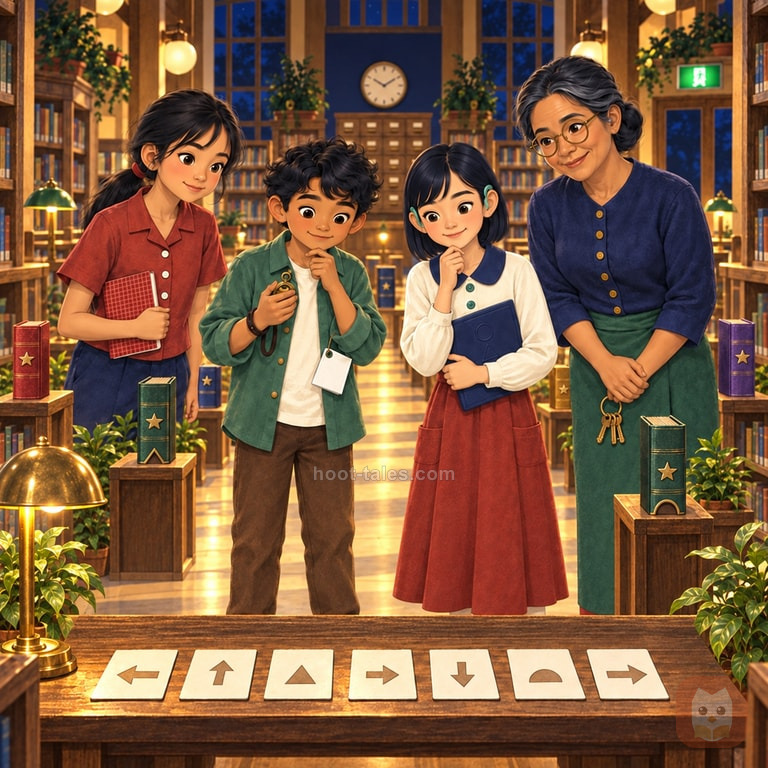
The three explained their reasoning for Aunt Praw to check. Waat pointed to the route that must stay clear. Yusuf showed the feedback that ruled out a desk-only layout. Tonliu set out three kinds of evidence—the five-piece plan, participants’ answers, and the room check. “Room Zero is a place to try different ways of reading, not a hidden prize,” she said. Aunt Praw checked the plan and agreements once more, then used her key to open the ordinary door shown on the building plan. Other event adults stayed nearby and the exit remained clear.
Inside Room Zero, Aunt Praw set up a supervised trial using the checked plan: a clear route, a table with room to roll up, adjustable lamps, a quiet reading corner, and an audiobook station with follow-along text. Waat settled with a book. Yusuf tried choosing between audio and text. Tonliu chose the seat and format that suited her. Event participants began to use the room and left suggestions for the next changes. Aunt Praw placed the five-piece plan beside their feedback cards. The space in its center was filled by the voices of people who would actually read here.
A shared room begins with asking and listening to the people who will use it.
The five-piece plan leads to Room Zero, but its user-needs field is blank. The children listen to event participants, test layouts, and help Aunt Praw open a flexible reading room.
More stories from the same collection, picked for you
Original Stories
⏱ 3–5 min

Original Stories
⏱ 2–4 min

Original Stories
⏱ 3–5 min

Original Stories
⏱ 8–13 min
Original Stories
⏱ 8–12 min