Les fables d'Aesop
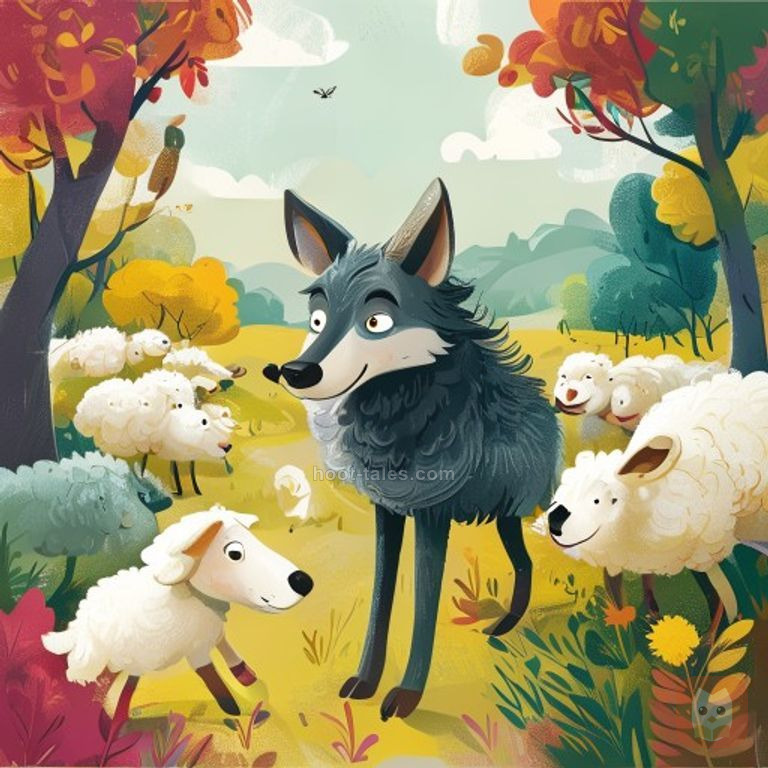
Le loup dans les vêtements de moutons
⏱ 3–5 Min
Un jour, un renard affamé errait dans une vigne quand ses yeux débarquaient sur un bouquet de raisins violet mûrs accrochés haut sur la vigne. Ils semblaient absolument délicieux.
«Ceux-là doivent avoir un goût merveilleux», pensa le renard, et il s'accroupit avant de sauter pour les attraper.
Il s'est encore appuyé et a bondi de toutes ses forces, toujours sans chance. Il a essayé encore et encore jusqu'à ce qu'il soit complètement hors de souffle.
Enfin le renard abandonna, s'asseya, se mit à pantir, et regarda les raisins avec déception dans ses yeux.
Il s'en alla, murmurant fort vers lui-même, «Hmph, ces raisins étaient probablement aigres de toute façon. Je ne les voulais pas.» Mais au fond, il savait que ce n'était pas vrai du tout.
Quand on essaie quelque chose et que ça ne marche pas, ne mentez pas à vous-même que vous ne l'avez jamais voulu en premier lieu. Il vaut mieux accepter la vérité, puis essayer une nouvelle façon ou continuer à pratiquer.
Un renard essaie encore et encore d'atteindre un tas de raisins juteux, et quand il ne peut pas, il se dit qu'il ne les a jamais voulus de toute façon.
Parents' guide
Children learning what to do when they lose, cannot reach a goal, or do not get what they hoped for. Notice the gap between a feeling and the words used to protect oneself.
After several attempts, the fox leaves saying the grapes were probably sour. A child may laugh at or blame the fox. Explore how those words might hide disappointment.
Materials: paper, pencil
A recently disappointed child may not want to discuss or solve the problem immediately. Allow a pause and return later.
Avoid labeling the fox a liar. Separate facts, feelings, and a story we tell ourselves to reduce hurt.
Plus d'histoires de la même collection, sélectionnées pour vous